Global Microbrand Watch Manufacturer

 Foksy Watches
  2025-12-17


Global Market & Regional Insights | Consumer Analysis | Competitive Landscape | Channel Strategy | Technical Innovation

The global traditional watch market reached approximately USD 853.3 billion in 2026, with Europe accounting for 58 billion USD and North America reaching 152 billion USD. The market demonstrates clear polarization: while smart wearables disrupt the entry-level segment, high-end mechanical watches continue their robust growth trajectory, particularly in Asia-Pacific which commands 33.7% of global market share.
The traditional watch industry maintains a delicate balance between quartz and mechanical movements. Quartz watches dominate with 75% of global shipment volume, primarily due to their superior accuracy, lower maintenance requirements, and cost-effectiveness for mass production. Mechanical watches, while representing only 25% of unit sales, contribute over 68% of total market value, reflecting their premium positioning and collector appeal.
Material sourcing patterns reveal significant geographic concentrations. Switzerland controls 72% of high-end movement exports globally, with raw material dependencies creating complex trade relationships. Germany serves as the precision components hub, exporting watch parts to 11 countries with India, Vietnam, and Kazakhstan representing 98% of its total parts exports. France maintains strong bilateral trade with Switzerland, where watches and components constitute 9.2% of French exports to Switzerland.
The European watch market exemplifies a mature ecosystem where tradition meets innovation. Valued at 58 billion USD in 2024, the market projects steady growth at 2.9% CAGR through 2035. Switzerland's dominance extends beyond manufacturing into regulatory leadership, with the Federation of the Swiss Watch Industry (FH) setting global standards for quality and authenticity.
Tariff Restructuring Impact: The EU's elimination of the EUR 150 de minimis exemption effective January 1, 2026, fundamentally alters the competitive landscape. This policy directly impacts the 4.6 billion low-value packages that entered the EU in 2024, 91% originating from China. The EU-US trade agreement, while reducing US tariffs on Swiss watches from 39% to 15%, maintains watch products outside the exemption list, preserving significant barriers.
Raw Material Vulnerabilities: Switzerland's reliance on imported high-end movements exceeds 90%, predominantly from Japan's MIYOTA and NH series. Precious metal supply concentration poses significant risks, with one-third of global gold refined in Switzerland and the watch industry consuming over 40% of global gold demand. The Responsible Jewellery Council's environmental certification becomes mandatory under new EU green tariff regulations, imposing an additional 10% duty on non-compliant products.
The North American watch market, valued at USD 152 billion in 2024, demonstrates robust growth with a projected CAGR of 6% through 2030. The US-Switzerland trade agreement's tariff reduction to 15% creates new opportunities, though complex US tariff structures maintain barriers for Asian-sourced components. The southern US region dominates with states like Texas and Florida driving consumption through strong retail infrastructure and high consumer spending.
Geopolitical trade policies continue reshaping supply chains. The US maintains a 145% tariff on Chinese watch kits while applying 15% on Japanese movements. This differential forces brands to reconsider manufacturing locations, with some establishing assembly facilities in Mexico to leverage USMCA benefits. Canada's market, though smaller, benefits from USMCA protection, providing stable access to US distribution networks.
The Middle East represents the fastest-growing luxury segment, with GCC countries importing 1.07 billion Swiss francs in H1 2025 alone. The UAE ranks among the top ten global importers of Swiss watches. Cultural factors profoundly influence product design—Islamic traditions discouraging gold for men drive demand for steel, titanium, and ceramic alternatives.
Ramadan contributes 22% of annual watch sales, with limited editions achieving 3.2x higher pre-sales than regular models. Duty-free structures offer 25% price advantages, making airports critical retail channels. Dubai International Airport's duty-free sales reached USD 175 million in July 2025, underscoring the importance of travel retail in this region.
Australia: The market shows mature stability with outdoor culture driving demand for rugged, functional timepieces. Tourism recovery boosts sales, while strong environmental consciousness favors sustainable materials. Watch consumption reached 178 pieces per thousand people in 2024, ranking first in Europe.
Southeast Asia: With 6.5 billion population and 62% under age 35, this region offers explosive growth potential. Economic development in Singapore, Malaysia, Thailand, and Indonesia expands middle-class purchasing power. However, infrastructure gaps in tier-2/3 cities require hybrid distribution strategies combining online platforms with traditional retail.
| Region | Market Value (USD Billion) | Growth Rate | Key Characteristics |
|---|---|---|---|
| Asia-Pacific | 285.6 | 8.2% | Youth demographic, digital adoption |
| North America | 178.0 | 6.0% | Diversified demand, e-commerce growth |
| Europe | 58.0 | 2.9% | Heritage focus, sustainability drive |
| Middle East | 25.3 | 11.5% | Luxury consumption, tax-free advantages |
Baby Boomers (Born 1946-1964): Functional Purists
This demographic maintains strong purchasing power in the high-end segment, with 42% buying watches primarily for timekeeping versus 26% overall average. They exhibit low price sensitivity and represent the core consumer base for complex mechanical watches. Their preference for classic designs and traditional craftsmanship drives demand for heritage models and limited editions. Only 7% view watches as decorative items, compared to 17% of younger generations, indicating their focus on intrinsic value over fashion statements.
Generation X (Born 1965-1980): Quality-Conscious Professionals
Gen X consumers demonstrate balanced priorities, equally valuing functionality and aesthetics (20% each). Their self-reward motivation runs slightly higher at 23%. This group shows strong affinity for multi-functional watches that transition between professional and leisure settings. They represent a significant market for hybrid smart-traditional watches, appreciating both technological integration and design sophistication.
Millennials (Born 1981-1996): Experience-Driven Collectors
Millennials have revolutionized watch collecting, with 72% influenced by social circle aesthetics when making luxury purchases. They value multi-functional watches and respond strongly to digital marketing and influencer endorsements. Their purchasing decisions reflect a desire for products that balance style and technology. Importantly, 68% of millennial female buyers willingly pay 20%-35% premiums for exclusive design services, with this ratio reaching 83% among affluent millennials.
Generation Z (Born 1997-2012): Digital-Native Investors
Despite 68% of Gen Z primarily using smart devices as wristwear, they paradoxically show the strongest investment mindset toward traditional watches. Forty-five percent of those under 20 consider luxury watches excellent investment vehicles. Their acceptance of emerging brands reaches 54%, 23 percentage points higher than traditional brand preference. They demand personalization, sustainability, and seamless digital integration.
Germany: Rational consumption dominates, with consumers prioritizing durability and precision. The market shows high demand for mid-range quartz analog watches, where cost-effectiveness meets functional excellence. German buyers meticulously evaluate technical specifications, favoring brands that transparently communicate movement quality and material specifications.
France: Design aesthetics drive 34% of purchase decisions, while brand importance has declined to 27%. The 25-34 age segment grew from 28% in 2020 to 37% in 2024, indicating market rejuvenation. French consumers embrace smart features and sustainable materials, with 60% prioritizing brands with strong environmental commitments.
Italy: After three years of decline, online channels show modest recovery (35.4% volume, 25.6% value growth) but remain below the 40% pandemic peak. Design importance surged to 34% while brand loyalty decreased, reflecting a shift toward personal expression over status signaling.
UK: Maintains luxury market dominance through tourism and brand heritage. Per capita consumption of 178 pieces per thousand people ranks highest in Europe. British consumers demonstrate strong affinity for limited editions and heritage models, with second-hand luxury watches expected to reach 29-32 billion USD by 2025.
Middle East: Cultural sensitivity shapes product development. Islamic geometric patterns and star-moon symbols dominate, with Ramadan editions achieving 3.2x pre-sale multiples. The prohibition on gold for men drives innovation in alternative luxury materials like platinum, titanium, and high-tech ceramics.
Personalization Explosion: The global high-end watch customization market hit USD 4.86 billion in 2023, projected to exceed USD 11.2 billion by 2030 (12.8% CAGR). Female segment share jumped from 37% (2020) to 51% (2025), becoming the primary growth driver. Seventy-eight percent of millennial female buyers pay 20-35% premiums for exclusive design services.
Sustainability Deepening: Over 95% of Vacheron Constantin's gold originates from RJC-certified suppliers, primarily from recycled sources. More than 60% of consumers prioritize brand history and cultural heritage, driving transparency in supply chains. This trend compels brands to adopt traceable sourcing and circular economy practices.
Digital Purchase Journey: Social media influence on watch purchases is twice the global average in Mexico, with similar patterns emerging across Europe. Seventy-two percent of millennials are influenced by social circle aesthetics, while Gen Z discovers 73% of new watch brands through Instagram and TikTok.
The convergence of these behavioral shifts creates a hybrid consumer profile: digitally-native yet craftsmanship-appreciating, price-conscious yet sustainability-oriented, and globally aware yet locally connected. Brands must navigate this complexity through hyper-personalization, transparent storytelling, and seamless omnichannel experiences.
The European traditional watch market exhibits extreme concentration, with the "Big Four" Swiss groups—Rolex, Swatch Group, Richemont, and LVMH—controlling 76% of market share by value. This consolidation reflects decades of strategic acquisitions, with waves in the 1930s, 1960s, 1970s, 1980s, and 1990s cementing their dominance.
Rolex's Unprecedented Supremacy: In 2023, Rolex became the first Swiss watch brand to exceed CHF 10 billion in sales (USD 11.5 billion), capturing 30.3% retail market share—greater than the combined sales of its top five competitors. Producing 1.24 million timepieces annually, Rolex's vertical integration and controlled distribution create insurmountable barriers for challengers.
Richemont Group's Portfolio Strategy: Controlling Cartier, Vacheron Constantin, and IWC, Richemont demonstrates differentiated performance within conglomerates. While Vacheron Constantin and A. Lange & Söhne gained market share, IWC's sales dropped 13% to CHF 726 million due to pricing misalignment. Cartier's watch division achieved 8% growth to CHF 3.1 billion, surpassing Omega for the first time with 7.54% versus 7.49% retail market share.
Luxury Market Concentration: The four major luxury brands (Rolex, Patek Philippe, Audemars Piguet, Richard Mille) increased their combined market share by 203 basis points to 43.9% in 2024—693 basis points higher than the pre-pandemic 36.9%. This trend indicates accelerating consolidation at the high end.
Despite oligopolistic pressures, independent watchmaking brands demonstrate remarkable growth, increasing market share from 8.7% (2025) to a projected 12.4% (2030). Three independent brands—FP Journe, H. Moser & Cie, and Greubel Forsey—entered the top 50 for the first time in 2023, with sales of CHF 98 million, CHF 93 million, and CHF 50 million respectively.
Success Formula for Independents: These brands leverage digital marketing and storytelling to achieve higher-than-expected growth. FP Journe maintained independence by controlling 20% equity while partnering with Chanel, preserving creative freedom. MB&F, founded in 2005 by Maximilian Büsser, operates as a creative laboratory fusing horology with art, gaining recognition for futuristic "horological machines."
Niche Market Penetration: Independent brands excel in ultra-high-end customization, where the market is projected to reach USD 8.6 billion in 2025 and USD 12.9 billion by 2030 (8.5% CAGR). Women now represent 51% of this segment, up from 37% in 2020, indicating significant gender-driven expansion opportunities.
Generational Shift in Brand Loyalty: Fifty-four percent of consumers under 35 accept emerging brands—23 percentage points higher than traditional brand preference. This demographic embraces personalization, sustainability, and digital-first experiences, creating entry points for startups.
Market Share Trajectory: Emerging brands' market value grew 18% year-over-year in 2024 to approximately CHF 3.5 billion, with smartwatches and high-end customization driving growth. By 2026, emerging brands are expected to capture 35% of market growth, becoming a primary industry catalyst.
"Wealthy collectors are perpetually eager to discover new brands, new stories, and rare timepieces. This hunger for novelty creates perpetual opportunities for independent creativity."
Barriers to Entry Analysis:
While opportunities exist, barriers remain formidable:
European watch retail channels are undergoing profound transformation from pure sales to experiential destinations. Despite digital growth, 74% of industry executives expect offline sales to remain dominant through 2029, driven by the tactile nature of luxury purchases.
Brand-Owned Store Expansion: Forty-one percent of executives plan new single-brand or flagship stores within 12 months. Rolex's acquisition of Bucherer in 2022 exemplifies vertical integration, with plans to cancel approximately 40 German boutique licenses by 2026, consolidating distribution control.
Multi-Brand Retailer Challenges: Paradoxically, 38% of consumers prefer multi-brand stores versus 23% for single-brand boutiques. This tension forces brands to balance control with consumer convenience. Multi-brand retailers like Watches of Switzerland maintain relevance through curated selections and expert curation.
Innovative Retail Formats:
The channel landscape diversifies through:
Online watch sales experience explosive growth, with e-commerce platforms, social commerce, and brand websites forming a tripartite ecosystem. Germany's market data reveals online sales represent 57% of total revenue, with Amazon alone commanding 46% market share.
Luxury E-Commerce Maturation: Europe's luxury online market share reached 48.8% in 2025, valued at €42 billion. Young consumers' digital nativity drives this shift, demanding seamless online experiences with virtual try-on capabilities and AI-powered recommendations.
Social Commerce Revolution: Platforms like TikTok Shop and Instagram Shopping achieve sales conversion through content marketing and KOL collaborations. Luxury brands increasingly use exclusive digital boutiques to cater to tech-savvy consumers, blending entertainment with commerce.
Europe's watch logistics system excels in efficiency, security, and professionalism. Specialized services include shockproof packaging, multi-level cargo insurance, and direct dedicated lines like DHL Paket Europe that minimize transit risks.
Warehousing Requirements: Strict environmental controls mandate temperatures between 5-50°C, relative humidity below 50%, and dust-free ventilation. Leading providers like Maersk offer European fulfillment centers with FTL, LTL, and parcel delivery services, enhancing inventory flexibility.
Supply Chain Risk Mitigation: Brands diversify supplier bases geographically to counter political instability, tariff increases, and natural disasters. This strategy reduces single-region dependency while improving delivery speed through localized distribution.
European high-end brands maintain leadership through dual-driven strategies combining traditional craftsmanship with modern innovation. Omega's Spirate system achieves ±0.1 seconds daily deviation, representing mechanical precision's new pinnacle. The Swatch Group's Powermatic 80 movement delivers 80-hour power reserves, setting mid-market benchmarks.
Material Innovation Differentiation: Ceramic-carbon fiber composites exceed 40% application rates in 2024, offering 60% weight reduction and 5x hardness improvement over steel. Omega's 100% recycled stainless steel cases drive 28-point Gen Z awareness increases.
Sustainability as Competitive Advantage: Over 95% of Vacheron Constantin's gold comes from RJC-certified recycled sources. This commitment not only ensures ethical sourcing but also resonates with environmentally conscious ultra-high-net-worth individuals.
The mid-range market (USD 1,000-10,000) competes fiercely through precision positioning and scenario-based development. Brands balance mature movement technology with design innovation to optimize value propositions.
Scenario-Based Product Development:
Channel Innovation: Mid-range brands adopt flexible strategies combining e-commerce expansion with selective boutique presence. Multi-brand retailer partnerships reduce single-store costs while outlet channels clear inventory efficiently.
| Segment | Price Range (USD) | Growth Rate | Key Success Factors |
|---|---|---|---|
| Ultra-Luxury | 25,000+ | 8.5% | Heritage, Exclusivity, Complex Functions |
| Luxury | 5,000-25,000 | 6.2% | Brand Prestige, Quality, Resale Value |
| Mid-Range | 1,000-5,000 | 4.8% | Value, Design, Multi-functionality |
| Entry | 100-1,000 | 2.1% | Price, Durability, Fashion |
The entry-level market (USD 100-500) is dominated by fashion brand extensions and fast-fashion retailers. Price sensitivity is extreme, with 10-20 EUR differences influencing purchase decisions. Product life cycles are short, requiring rapid response to trends.
Competitive Landscape: Fast fashion brands (Zara, H&M) launch watch lines, while sports brands (Nike, Adidas) offer functional models. Electronic brands like Casio and Timex maintain strong presence, and Chinese brands enter via cross-border e-commerce.
Startup Entry Pathways: Differentiation through unique designs, social commerce leverage, IP collaborations, and agile supply chains enable quick market response. However, margins are thin and brand loyalty minimal, requiring volume-driven profitability.
Switzerland maintains absolute leadership in high-end movement technology, with exports accounting for 72% of global totals. Omega's Spirate system achieves ±0.1 seconds daily deviation, representing mechanical precision's pinnacle. The Swatch Group's Powermatic 80 movement delivers 80-hour power reserves, becoming mid-market benchmarks.
Asian Technology Catch-Up: China's Seagull tourbillon movements achieve mass production at 60% lower costs than Swiss equivalents. However, high-end complex function movements still see over 90% import dependence due to material science gaps (special alloys, gemstone bearings) and micron-level processing expertise requiring decades of accumulated experience.
Smart Integration Trends: Hybrid movements combining traditional mechanics with digital functions represent the future. The challenge lies in maintaining mechanical aesthetics while incorporating sensors, connectivity, and power management without compromising reliability.
Traditional Materials Dominate: Stainless steel accounts for 58% of watch cases due to durability and cost-effectiveness. Precious metals represent 62% of high-end cases, with Middle Eastern demand for gold growing 41% annually.
Advanced Composites: Ceramic-carbon fiber composites exceed 40% application rates in 2024, offering 60% weight reduction and 5x hardness versus steel. Titanium alloys provide lightweight hypoallergenic properties ideal for sports watches.
Sustainable Materials: Chopard's Lucent Steel™ uses industrial waste from Swiss manufacturers, while bio-based materials like mushroom mycelium and plant fibers enter strap production. Recycled metals and ocean plastics address environmental concerns while adding unique storytelling value.
| Material | Hardness (Vickers) | Weight (g/cm³) | Corrosion Resistance | Cost Index |
|---|---|---|---|---|
| Stainless Steel (316L) | 150-200 | 7.9 | Excellent | 100 |
| Titanium Grade 2 | 200-250 | 4.5 | Superior | 250-300 |
| Ceramic (ZrO₂) | 1200-1500 | 5.7 | Outstanding | 400-500 |
| Carbon Composite | 600-800 | 1.6 | Excellent | 800-1200 |
Temperature Sensitivity: Mechanical watches operate optimally at 18-22°C. Extreme temperatures affect lubricant viscosity and material thermal expansion. Quartz movements experience ±0.20 seconds/day deviation at 8°C and 38°C, versus ±0.07 seconds/day at 23°C.
Humidity and Corrosion: High-humidity environments increase damage rates by 35% due to movement moisture and metal corrosion. Water resistance ratings (30m daily, 100m swimming, 300m diving) must match usage scenarios to prevent catastrophic failures.
Magnetic Interference: Modern life exposes watches to magnetic fields from devices, affecting mechanical accuracy. Anti-magnetic designs using soft iron inner cases or silicon components mitigate risks, with silicon hairsprings offering superior magnetic resistance.
Damage Rate Analysis: Service environment critically impacts lifespan. Southeast Asian and Middle Eastern desert climates show 35% higher damage rates than temperate zones. Proper design and maintenance can reduce failure rates by 30%, emphasizing the importance of user education.
Maintenance Requirements: Mechanical watches require professional servicing every 2-3 years, including cleaning, lubrication, and adjustment. Quartz watches need battery replacements every 2-3 years, with gaskets replaced simultaneously to maintain water resistance. High-temperature environments accelerate lubricant degradation, necessitating more frequent service intervals.
Middle Eastern Market: Islamic geometric patterns and star-moon symbols dominate designs. Ramadan limited editions featuring gold tones and religious motifs achieve 3.2x pre-sale multiples compared to regular models. Brands like Hublot and TAG Heuer create exclusive Middle Eastern editions, demonstrating cultural respect and market insight.
Indian Market: Hindu symbols such as lotus flowers and auspicious knots are preferred, with gold cases paired with religious carvings becoming classics. During religious festivals, sales of watches with such elements increase by over 50%, highlighting religion's significant influence on purchase decisions.
European/ American Markets: Religious elements are applied subtly through minimalist crosses and icon outlines, avoiding controversy from over-religious designs. This reflects Western society's religious diversity and secularization trends.
National Pride Driving Local Design: Chinese brands integrate calligraphy, ink painting, and cloisonné craftsmanship, with Fiyta's aerospace co-branded models achieving 78% year-over-year sales growth. This "national tide" phenomenon influences young European consumers' aesthetic preferences beyond Chinese markets.
Japanese Retro Revival: Japanese brands focus on Showa-era reissues, with 42% local market sales growth. This retro trend reflects nostalgia for traditional craftsmanship and classic designs, coupled with pursuit of quality and durability.
Sustainability Shaping Design Language:
The global sustainability trend profoundly influences design directions:
Gender-Neutral Design Rise: Gender-neutral watch models increased from 8% (2020) to 15% (2025), with oversized dials and neutral tones becoming mainstream. This shift reflects evolving social norms and expanding design freedom.
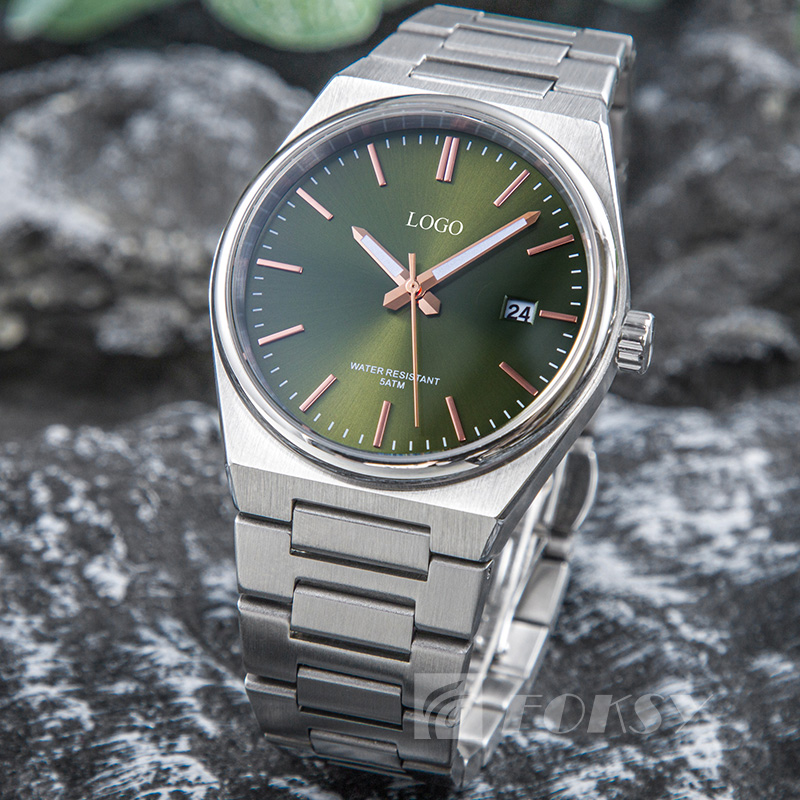
Contemporary watch design leverages color psychology to evoke emotions and convey brand values. Blue dials dominate professional segments, conveying trust and stability. Green, popularized by Rolex's Submariner, represents growth and luxury. Black maintains timeless elegance across all segments.
Finish Innovation: DLC (Diamond-Like Carbon) coatings offer extreme scratch resistance while enabling deep black finishes. PVD (Physical Vapor Deposition) provides versatile color options from rose gold to gunmetal grey. These technologies allow brands to differentiate without precious metals, crucial for mid-range positioning.
The convergence of cultural symbolism, technological advancement, and social consciousness creates a new design paradigm where every element—from dial texture to buckle shape—must tell a coherent story that resonates with target demographics while honoring horological traditions.


Focus On Customize Watches
For Micro Brands
Room C201, Huafeng Wisdom Innovate Park, Gushu 2nd Road, Bao'an Dist, Shenzhen, China.