Global Microbrand Watch Manufacturer

 Foksy Watches
  2025-07-25


Watches are manufactured and decorated by a variety of processes, each of which has its own unique characteristics and application scenarios. Below I will expand on the differences between laser, radium, etching and oil pressure processes to deepen your understanding and interest in watches.
1. Laser Process (Laser Engraving/Etching)
Principle: Utilizing a high-energy laser beam to accurately ablate or oxidize the surface of a material to form a pattern or text.
Characteristics:
High precision: can handle complex patterns and micro-fine text.
Non-contact: Avoids physical damage and is suitable for delicate materials.
Flexibility: designs can be quickly adjusted through computer programming.
Applications:
Serial number, brand logo engraving for watch case/buckle.
Dial texture or decorative patterns (e.g. carbon fiber effect).
Extensions:
Laser cutting: for precision cutting of metal or ceramic bracelet components.
Laser marking: anti-counterfeiting marking or personalization (e.g. signature).
2. Laser Ablation/Color Marking
Note: Laser is another translation of laser, but sometimes refers specifically to surface color change treatment.
Principle: Chemical changes (e.g. oxidation) occur on the surface of the material through the laser, resulting in a color contrast rather than engraved depressions.
Characteristics:
No depth: only change the surface color, without destroying the flatness.
Colorful effect: stainless steel and other materials can be black, gold, blue and other colors.
Applications:
Colorful logo or scale marking on the dial.
Anti-reflective treatment (laser matting).
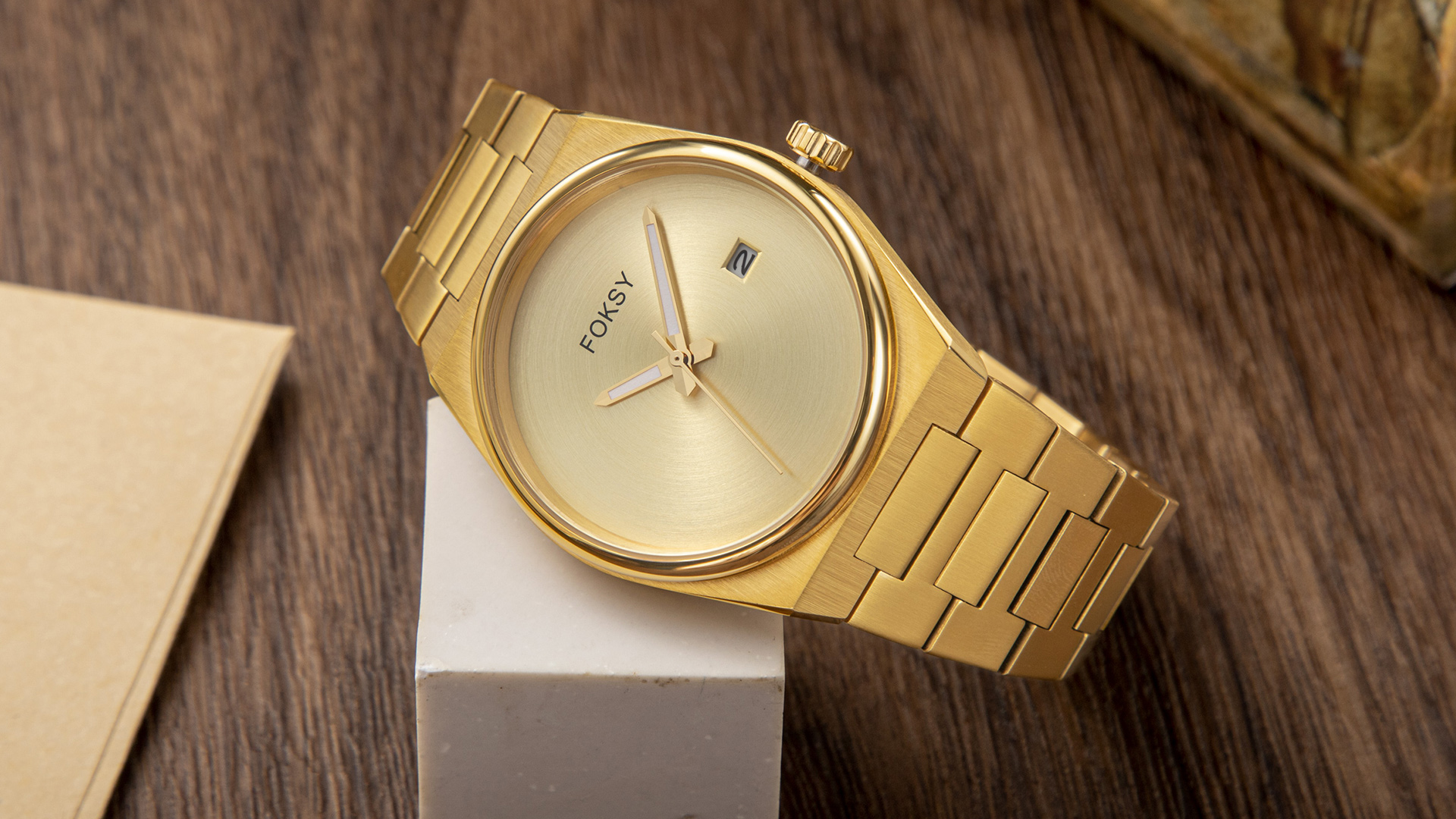
3. Chemical Etching (Chemical Etching)
Principle: Using acid or alkali solution to corrode the unprotected part of the metal surface to form a concave-convex pattern.
Characteristics:
Low cost: suitable for mass production of simple patterns.
Uniformity: Can handle large areas or complex surfaces.
Limitations:
Environmental issues (need to dispose of waste liquid).
Less accurate than laser, edges may not be sharp enough.
Applications:
Vintage patterns or brand logos on traditional dials.
Design elements for industrial style watches (e.g., corroded aged effects).
Extensions:
Photolithography etching: Combination of photosensitive adhesive and UV exposure for higher precision (for precision movement parts).
4. Hydraulic Pressing (Stamping/Pressing)
Principle: Pressing a concave or convex texture or pattern on a metal surface by means of a mold and a hydraulic press.
Characteristics:
High efficiency: suitable for mass production (e.g., watch bracelet texturing).
Three-dimensionality: deep relief effects can be created.
Limitations:
High mold cost, difficult to change design.
Only suitable for softer metals (e.g. stainless steel, copper).
Applications:
Repeated patterns on straps (e.g. wheat, waves).
Decorative ribbing or branding embossing on watch cases.
Extensions:
Stamping and molding: direct manufacturing of three-dimensional structures for cases or clasps.
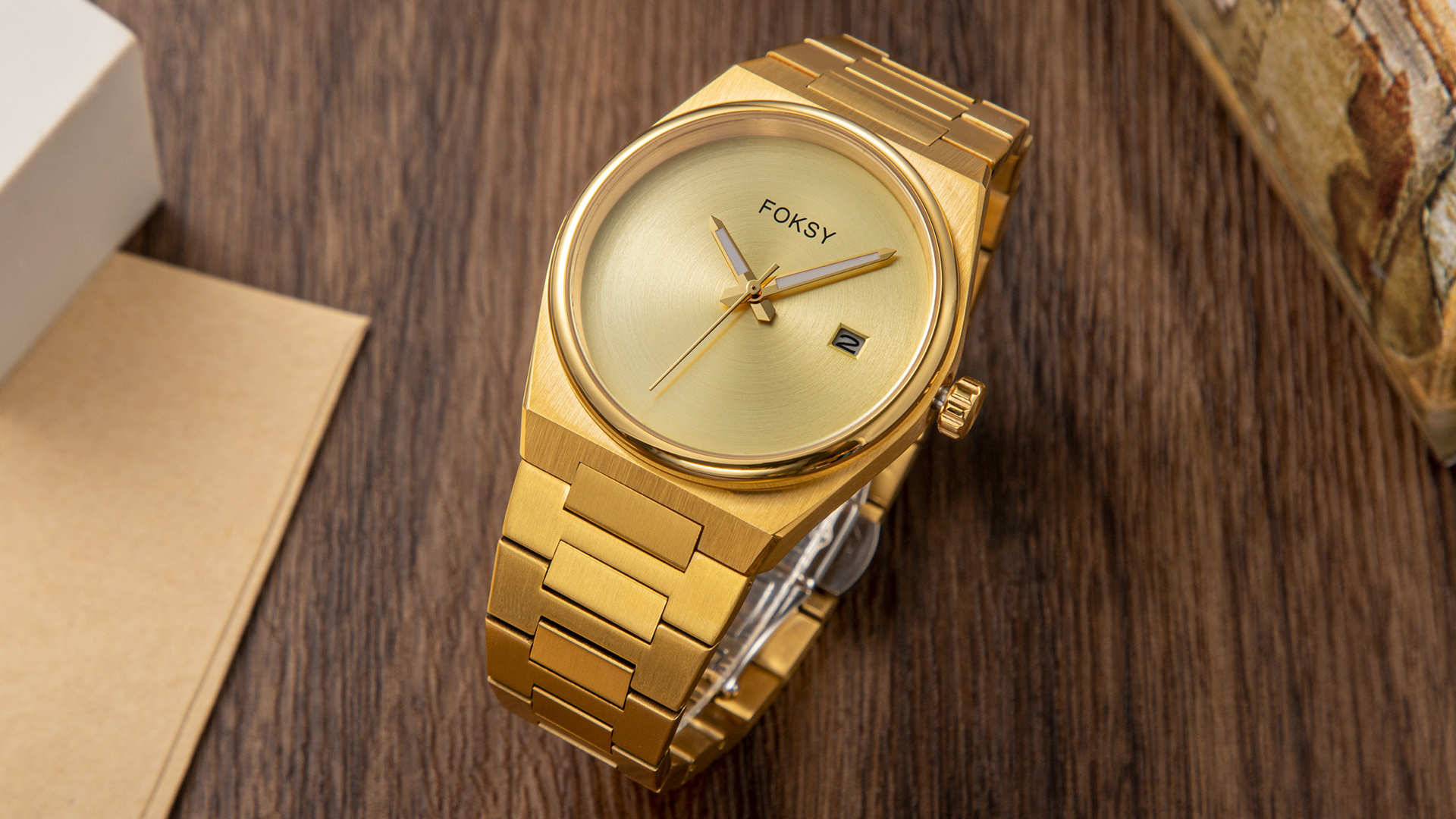
Other Extended Processes
Plating (Electroplating)
Plating of surfaces with gold, black, etc. to enhance aesthetics or corrosion resistance (e.g., rose gold cases).
Sandblasting
Creates a matte texture, often combined with laser engraving (e.g. matte dial + glossy text).
3D Printing (Additive Manufacturing)
Used for prototyping or complex structures (e.g. skeletonized movement supports).
A deeper understanding of these crafts will not only enhance your appreciation of the art of the watch, but also its unique value as a collector's item. A watch is not only a timekeeping tool, but also a crystallization of craftsmanship and aesthetics. If you are interested in watch customization or personal branding, please feel free to inquire Foksy- we will provide you with professional advice and exclusive services.


Focus On Customize Watches
For Micro Brands
Room C201, Huafeng Wisdom Innovate Park, Gushu 2nd Road, Bao'an Dist, Shenzhen, China.