Global Microbrand Watch Manufacturer

 Foksy Watches
 2026-10-30


Guilloché and Enamel: How Two Traditional Arts Create Exceptional Watch Dials
Customizing a luxurious dial does not rely on diamonds or complex functions, but it can present a very rich gradation as the light changes. One of the most representative combinations is Guilloché and Enamel.
For consumers and brand buyers who are looking for enamel dial watches or guilloche dial watches, the value of these two crafts doesn't just seem more complicated. Guilloche creates textures and light effects, while enamel gives color, transparency and depth. When combined, a flat metal dial will produce a visual effect similar to that between relief and glass.
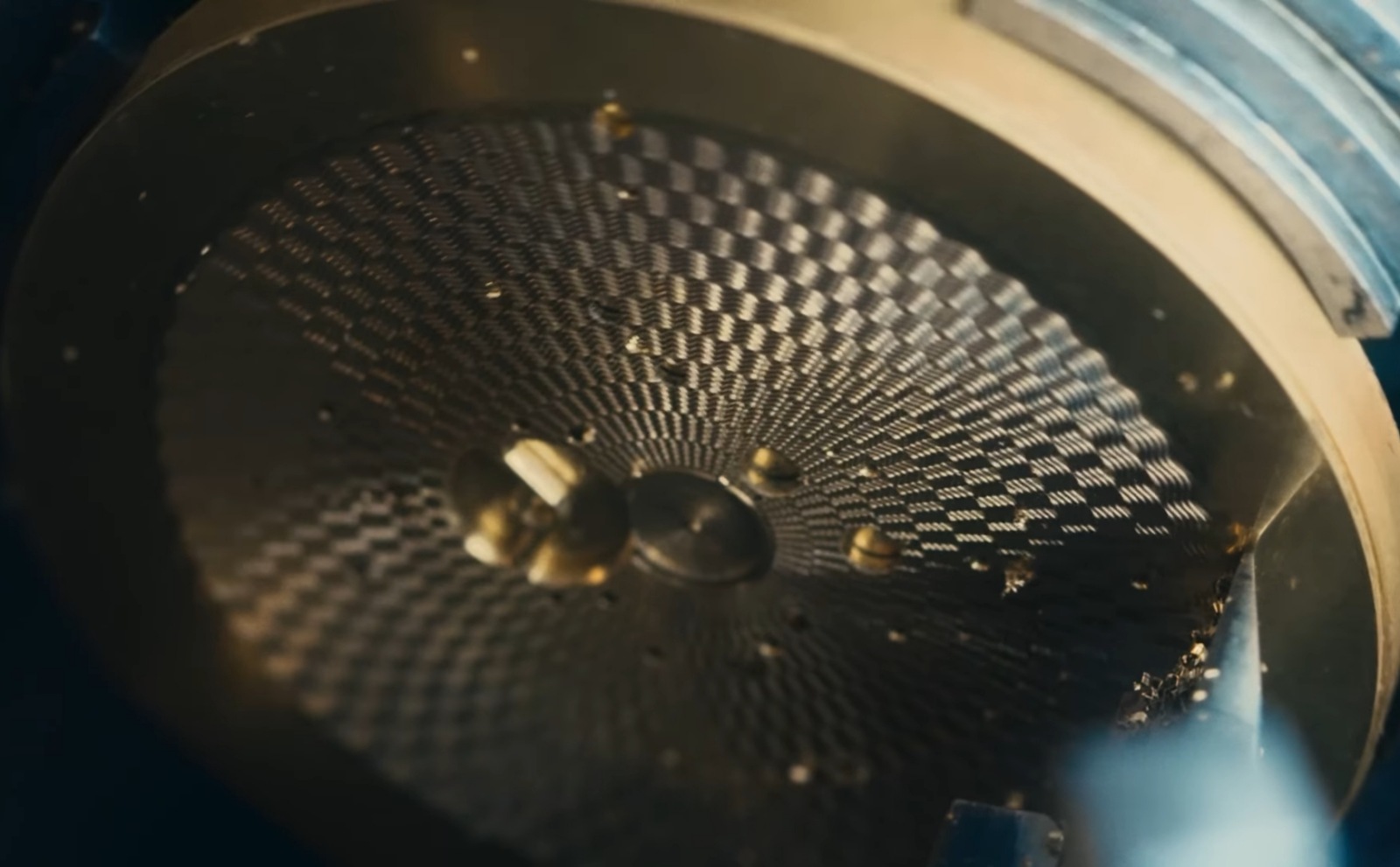
Guilloche dial watch process that uses special machine tools to carve continuous and regular textures on metal surfaces. The guilloche texture is cut directly into the metal surface, thus creating distinct layers of light and shade when the light changes.
Abraham-Louis Breguet began applying machine-cut Guilloche to dials in 1786, it can also reduce the reflection on smooth surfaces and use different textures to distinguish the time display areas.
The charm of classic guilloche dial watches are not just complex pattern, but accurate, regular geometry and light together form the visual effect.
It is usually composed of minerals and metal oxide enamel material ground into a fine powder, laid on the metal substrate, and then after high temperature firing (temperature can reach about 850°C), many times into the furnace, color, transparency and the final surface effect are affected by temperature, material proportion and firing times, so that the material melts and combines with the dial.
After the enamel dial technique is properly fired, the surface will have a special glass-like texture and color depth, and can maintain its color for a long time.
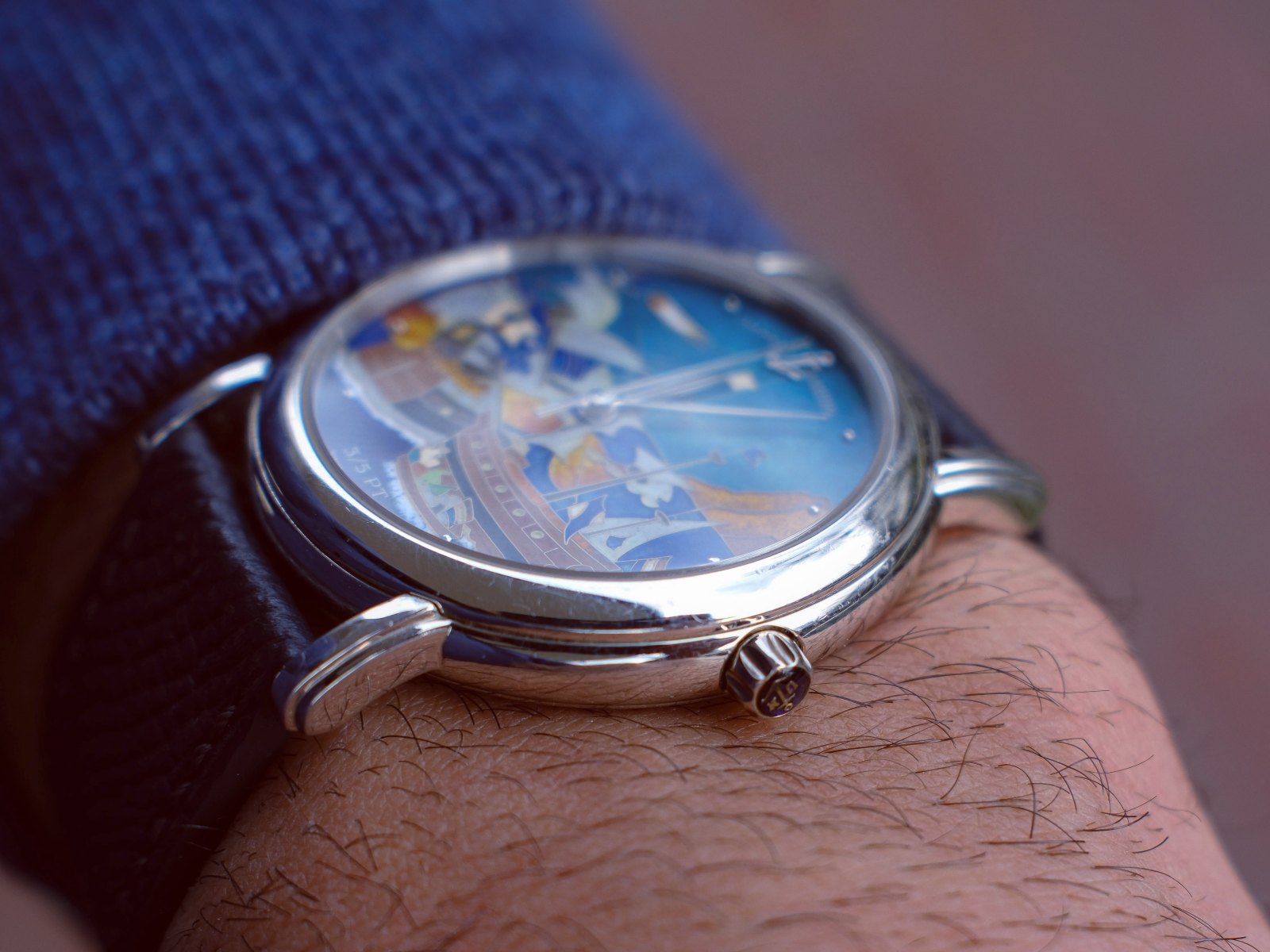
After the combination of the two crafts, it is usually called Flinque decoration.
The underlying Guilloche is not completely covered. Light passes through the transparent enamel layer first, then shines on the metal texture at the bottom, and finally reflects back.
Viewed from the front, it might be a blue, green or red dial. As the wrist is rotated, waves, radiations, or geometric patterns beneath will gradually appear again.
Czapek and other fine watchmaking brands have used a similar Flinque process, combining guilloche textures with colored enamel to achieve greater iridochromy and depth.
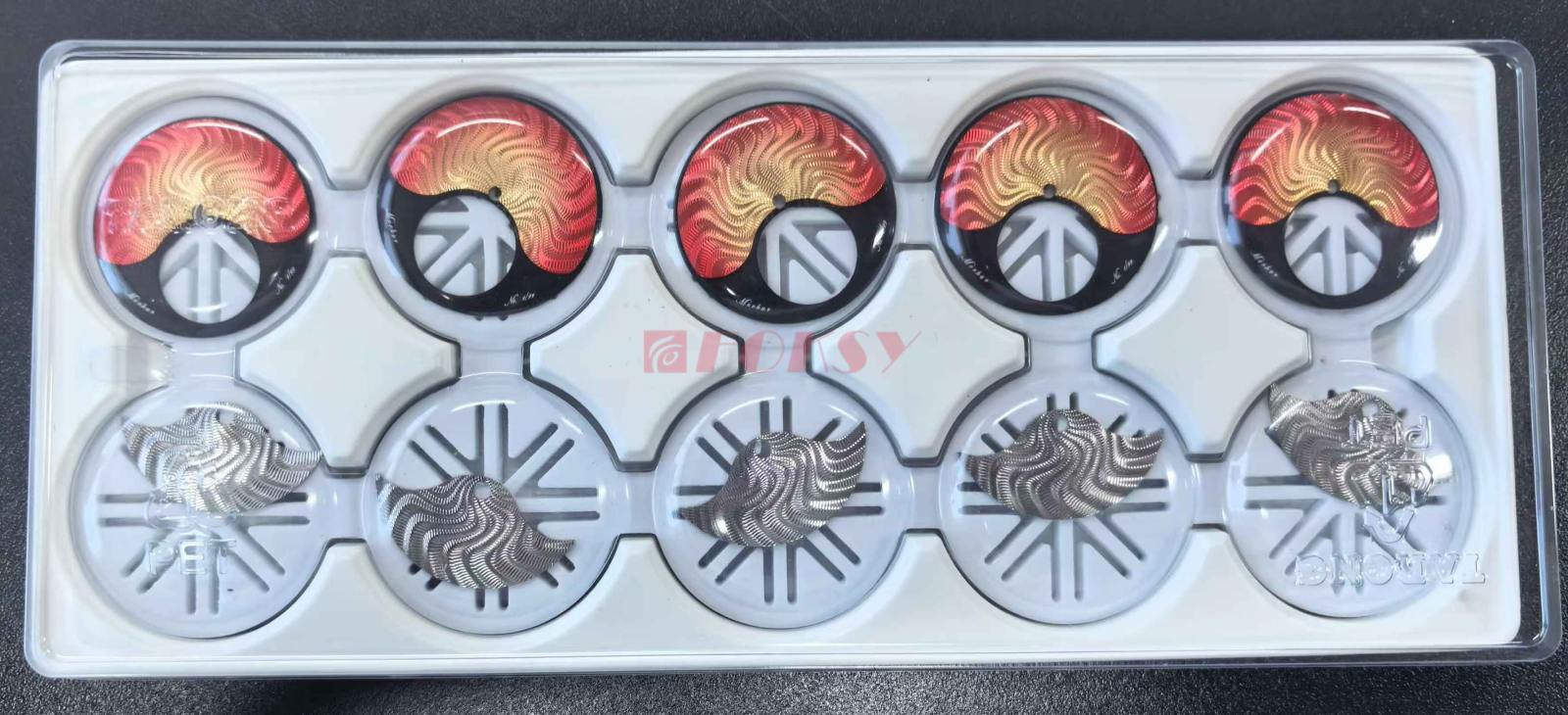
While ordinary dial can be quickly completed by stamping, spraying, plating and printing, guillocheenamel needs to process the metal base first, and then finish the texture, enamel, firing, grinding and printing and other links.
Traditional Guilloche requires the operator to control the depth, spacing and continuity of the patterns. Vacheron Constantin also pointed out that manual guilloche relies on the precise control of the machine tools and materials by the producer, and the regularity of the pattern itself is a technical difficulty.
Each high-temperature firing may result in color changes, uneven surfaces, deformation or even cracking. A dial that has done a lot of preliminary work may also be remade because the last firing failed.
Patek Philippe introduced its premium dial, pointed out that some dial from production to completion may involve 50 to 200 processes, and complex enamel work can take hours, weeks or even longer.
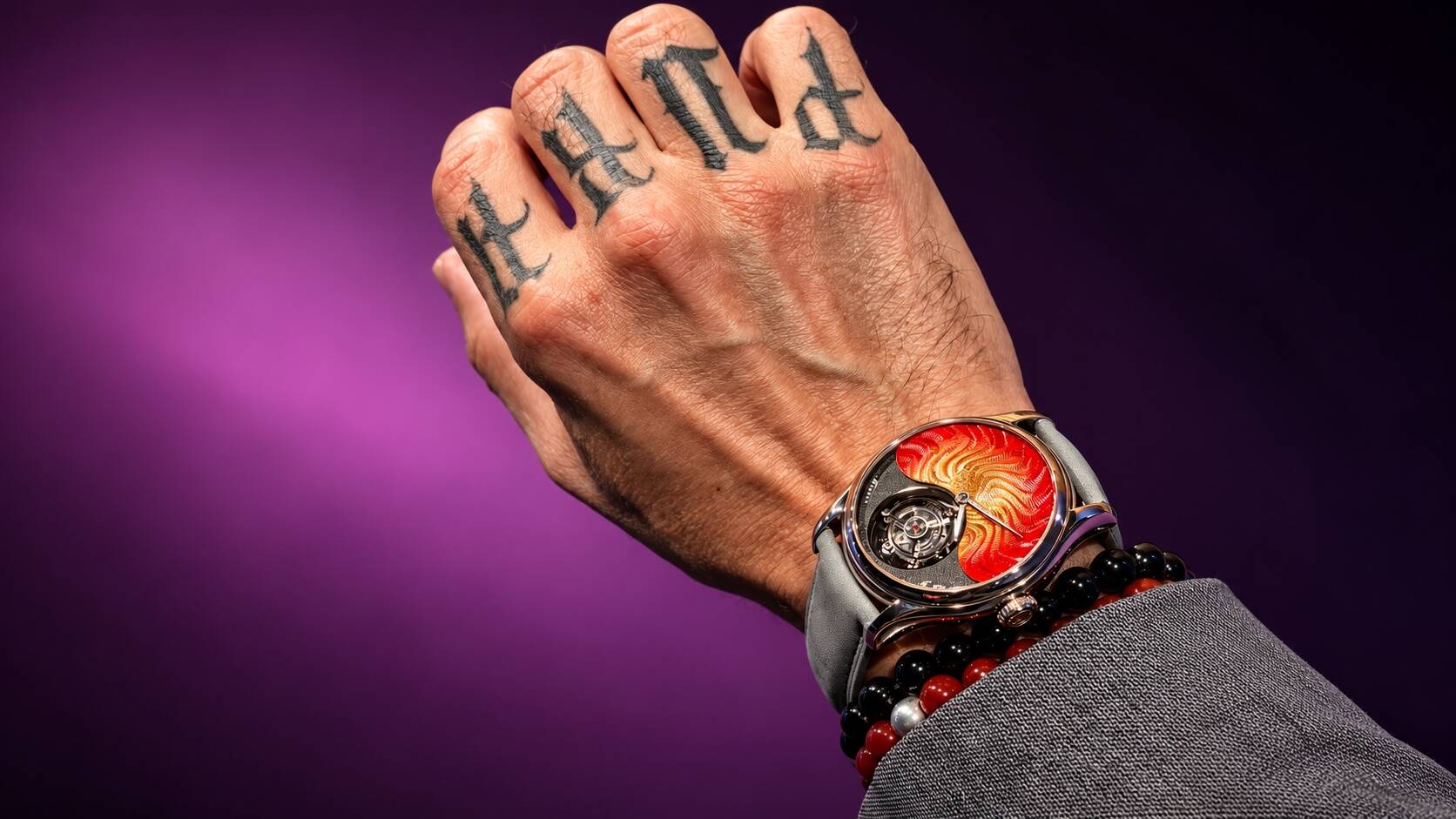
This process is more suitable for high-end mechanical watches, formal watches, limited series and products that emphasize the traditional art of watchmaking.
If the product itself is positioned as an entry-level fashion watch, but invests a lot of costs in creating true handcrafted guilloche and high-temperature enamel, the final retail price may not be able to match the target consumers.
For watch brand customization, FOKSY's 20-years professional watch factory suggests that based on the budget, different level schemes can be adopted: true handcrafted guilloche or enamel which is suitable for high-end watch series; mechanical embossing combined with transparent color layers can retain similar visual language while reducing the difficulty of mass production.
The key is not that all products use the most expensive techniques, but to match the techniques with the brand positioning.
Instead of printing, traditional guilloche cuts the texture directly on the metal surface through a dedicated machine tool. But modern mass-produced watches may also use stamping, for example, to simulate similar effects.
No, both techniques can be used independently. The value of combining them is to have the guilloche texture and the color and transparency of the enamel exist simultaneously.
Mainly because the production cycle is long, high manual requirements, there is a loss in firing, and the consistency control of mass production is more difficult, so it is more suitable to bear the higher process cost of the watch series.


Focus On Customize Watches
For Micro Brands
Room C201, Huafeng Wisdom Innovate Park, Gushu 2nd Road, Bao'an Dist, Shenzhen, China.